
Facial Harmonization · Surgical
Rhinoplasty: changing the nose so it doesn't look operated on
Some people, in every photo, look at their nose first. If that happens to you, we understand. Rhinoplasty changes the shape or size of the nose by working on the bone and cartilage. Dr. Thuel and Dr. Juan Ramón Poveda, Physician and Surgeon, Specialist in Plastic, Reconstructive and Aesthetic Surgery, plan it together while looking at your whole face. They aim for a nose that is in harmony with you and doesn't look operated on.
Medical consultation · US$100, VAT included. This amount is applied in full toward your treatment or procedure if you formalize it with your payment on the same day or within the following seven calendar days. It can be the full payment or a first payment of more than US$100. Booking it does not commit you to having surgery.
Every consultation is handled personally by Dr. Thuel and Dr. Poveda, so their availability is limited. We suggest booking in advance.
- Duration
- 1 to 3 hours
- Recovery
- Office work in 1 to 2 weeks
- When it shows
- By around 3 months; the tip, up to 1 year
- How long it lasts
- Long-lasting; the nose keeps changing
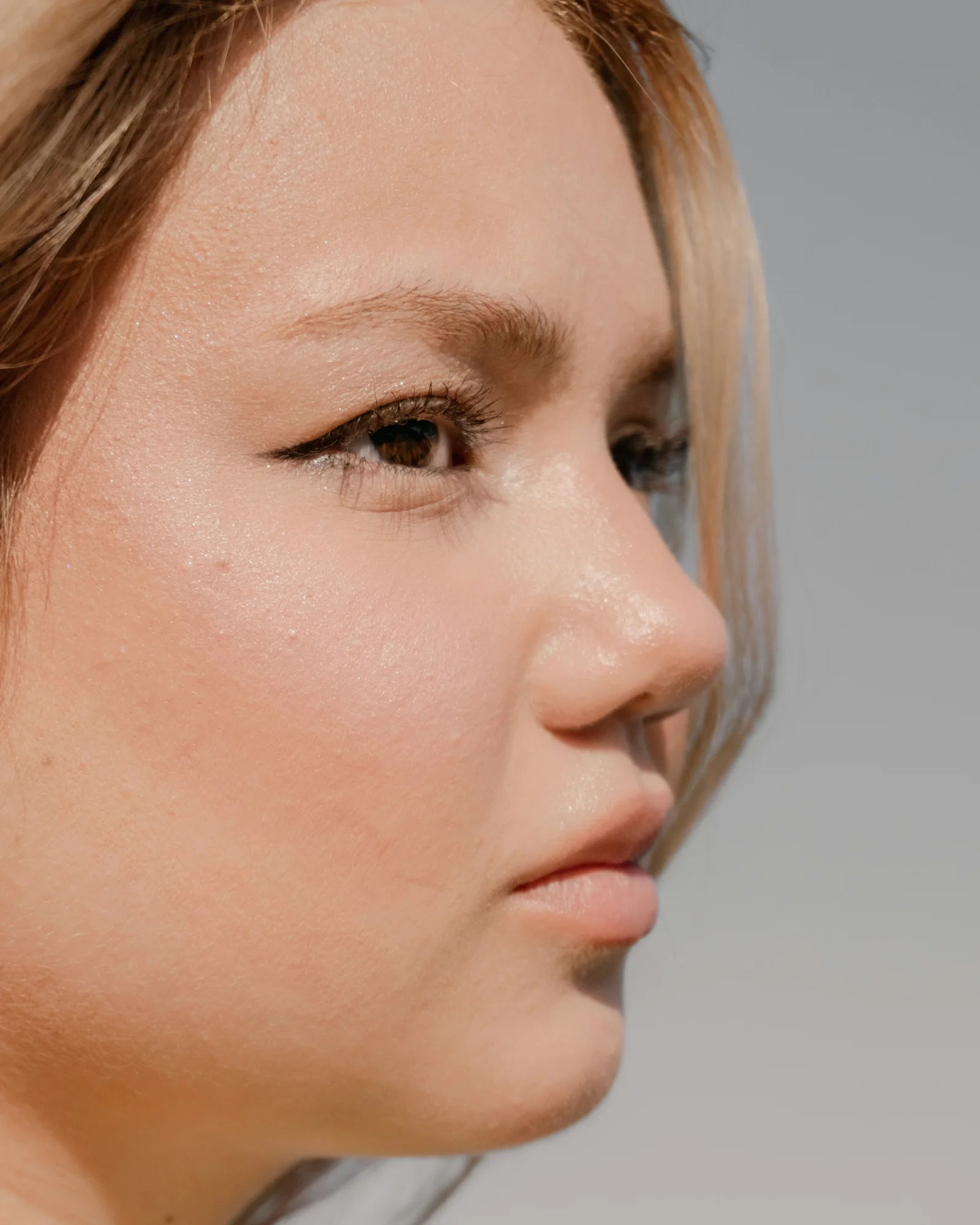
Proportion before change.
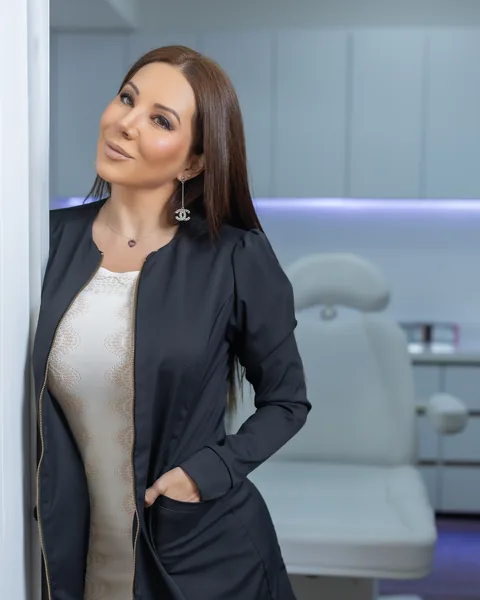
Dr. Irene Thuel · Physician and Surgeon, Expert in Aesthetic Medicine and Surgery · MED10355

The essentials before you decide
What Rhinoplasty involves, step by step
General information so you arrive at your consultation with a clear idea. It may vary in your case; Dr. Thuel and Dr. Poveda will confirm it at your consultation.
It may be right for you if…
- You see yourself in profile in photos and the first thing you notice is your nose.
- You avoid certain angles or position yourself so the hump doesn't show.
- Your nose became deviated from an injury or has always been that way.
- You have trouble breathing well through your nose and would like to improve it.
- You want a nose that is in harmony with your face and doesn't look operated on.
- What it is
- Surgery that changes the shape or size of the nose by working on the bone and cartilage. It sometimes includes the inside of the nose, to help you breathe better.
- How it is done
- It can be done from inside the nose or with a small incision between the nostrils. At the end, a splint is placed to protect the nose.
- Advantages
- It changes size and structure, something non-surgical nose reshaping can't achieve. If needed, breathing can be improved in the same surgery.
- Who performs it
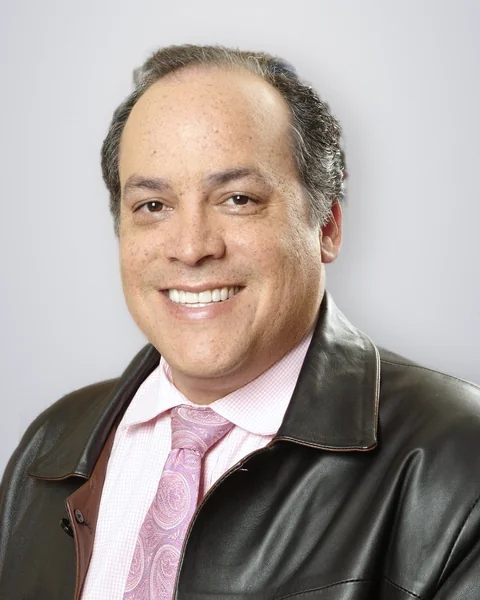
- Dr. Irene Thuel and Dr. Juan Ramón Poveda Xatruch, plastic surgeon, working as a team in the operating room.
- Anesthesia and discomfort
- It is usually performed under general anesthesia; in some cases, under local anesthesia with sedation. Rather than strong pain, you feel pressure and nasal congestion during the first few days; it is usually relieved with pain relievers. The physicians will tell you which anesthesia applies in your case.
- Duration
- Generally between 1 and 3 hours, depending on what your nose needs outside and inside.
- Hospital stay
- It is an outpatient procedure: you go home the same day, after a few hours of observation and with a companion.
- Recovery and care
- The splint and stitches are usually removed after a week; bruising around the eyes lasts 1 to 3 weeks. In general, you return to the office in 1 to 2 weeks and to intense exercise after 4 to 6 weeks. It's best to sleep with your head elevated, not blow your nose during the first few weeks, and protect yourself from the sun.
- When it shows
- The first change is visible when the splint is removed, while there is still swelling. By around 3 months most of it has gone down, but subtle swelling at the tip can take up to a year.
- How long the result lasts
- The change is long-lasting, although the nose, like the rest of the face, keeps changing over the years.
- Who should not have it
- It is not recommended while the nose is still developing, during pregnancy, or with untreated conditions or clotting problems. Smoking increases the risk. Both physicians review this during the consultation.
- Follow-up visits
- Generally, the first one is in the week of the surgery, when the splint is removed, and they continue throughout the first year. The dates are set by both physicians.
From tip to bridge
What a rhinoplasty can change
Bridge
Softening a hump, that “bump” that shows in your profile.
Tip
Refining, lifting or better defining the tip.
Size and width
Reducing them when the nose dominates the face.
Deviations
A crooked nose, from birth or from an injury.
Breathing
If you have trouble breathing, both physicians also assess the inside.
Rhinoplasty or non-surgical nose reshaping
A minor detail or a structural change?
A small hump or a slightly drooping tip can sometimes be camouflaged with hyaluronic acid, without surgery. But that does not reduce the size or straighten a deviated nose. That is what rhinoplasty is for, and Dr. Thuel and Dr. Poveda will tell you which of the two applies to you.
Consultation
Dr. Thuel and Dr. Poveda look at your nose from the front and in profile, together with your forehead, lips and chin.
Outside and inside
They both also check the inside, especially if you have trouble breathing. Then they explain what can be changed and what risks apply in your case.
Tests and surgery
You complete the tests the medical team requests. Dr. Thuel and Dr. Poveda work together in the operating room; the technique and anesthesia depend on your case.
Follow-up visits
Since swelling in the nose goes down slowly, these check-ups matter a lot. They are set by the medical evaluation.
The nose calls for patience
What you should know about recovery after nose surgery
No surgery is free of discomfort or risk. With the nose, the final result also takes time to show. Better to know this from the start.
What to expect
- Swelling in the nose and around the eyes. Also bruising and nasal congestion.
- Swelling goes down slowly: the result takes shape over time.
- The age from which surgery is possible is determined by both physicians.
Discomfort and risks
- Bleeding, infection, scarring, asymmetries or anesthesia complications.
- Difficulty breathing or numbness in the nose.
- In some cases, the need for another surgery.
We ask something simple of you: that you tell us honestly about your health and follow the home care instructions. The diagnosis, technique and follow-up visits are in the hands of Dr. Thuel and Dr. Poveda.
No operating room
When the nose doesn't need surgery
Is this surgery right for you? At the consultation, Dr. Thuel and Dr. Poveda review your case together and tell you frankly whether it suits you and what it involves. The consultation costs US$100, VAT included, which is applied in full toward your treatment or procedure if you formalize it with your payment on the same day or within the following seven calendar days. It can be the full payment or a first payment of more than US$100.
Frequently Asked Questions
What people ask us most about rhinoplasty
Rhinoplasty or non-surgical nose reshaping: which is right for me?
Non-surgical nose reshaping with hyaluronic acid can camouflage a mild hump or slightly lift the tip. It is done without surgery and its effect is temporary. To reduce size, narrow the nose or correct significant deviations, the option is rhinoplasty.
Will people notice I had surgery?
We aim for a nose that fits your face and doesn't look operated on. That's why it's planned by also looking at the forehead, lips and chin.
Does rhinoplasty improve breathing?
If the difficulty comes from the internal structure of the nose, both physicians assess whether it should be addressed in the same surgery.
What is the investment for rhinoplasty?
It depends on what your nose needs, outside and inside. We tell you the investment at the consultation, before you make any decision.
The consultation costs US$100, VAT included. If you decide to have a medical treatment or procedure, that amount is applied in full toward your treatment or procedure when you formalize it with your payment on the same day as the consultation or within the following seven calendar days. It can be the full payment or a first payment of more than US$100.
When can I return to my routine?
In general, most people return to office work in 1 to 2 weeks and to intense exercise after 4 to 6 weeks. For a few weeks, it's best not to rest glasses on your nose. It may vary in your case; Dr. Thuel and Dr. Poveda will explain what to expect.
Who performs my surgery?
You are cared for by a team: Dr. Irene Thuel and Dr. Juan Ramón Poveda Xatruch, MED5800. Both are at the consultation, in planning, in the operating room and at follow-up visits, and Dr. Poveda performs the surgery together with her. Together, they consider your nose along with the rest of your face.
A nose in harmony with your face
During the consultation, Dr. Thuel and Dr. Poveda listen to you, look at your nose together with the rest of your face and tell you frankly what can be achieved. It's the first step, and they take it with you.
Medical consultation · US$100, VAT included. This amount is applied in full toward your treatment or procedure if you formalize it with your payment on the same day or within the following seven calendar days. It can be the full payment or a first payment of more than US$100.
Every consultation is handled personally by Dr. Thuel and Dr. Poveda, so their availability is limited. We suggest booking in advance.